





















You will not be allowed to compare more than 4 products at a time

Collection: Zari Kattam Kanchipuram Silk Sarees for Festive Wear
A wide selection of handwoven pure silk sarees, each one a luminous gold grid woven thread by thread on a traditional pit loom in Kanchipuram, Tamil Nadu. Zari Kattam — where fine zari threads intersect across the silk body to form a structured, shimmering check — is one of the most recognisable weave structures in the Kanchipuram silk tradition. Every saree is Silk Mark certified and sourced directly from artisan weaver families. Free shipping across the USA.
Explore related Kanchipuram weave traditions: Vairaoosi Kanchipuram sarees for needle-fine directional zari, Korvai Kanchipuram sarees for interlocked contrast borders, Rettapet Kanchipuram sarees for twin parallel borders, and Kanchi Kattam sarees for structured silk checks.
Showing 1-24 of 50 Results
-
Vendor:Idam Living
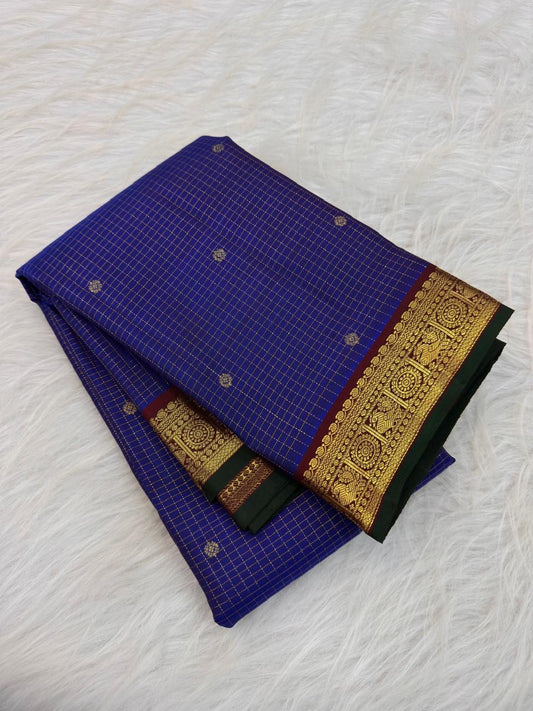
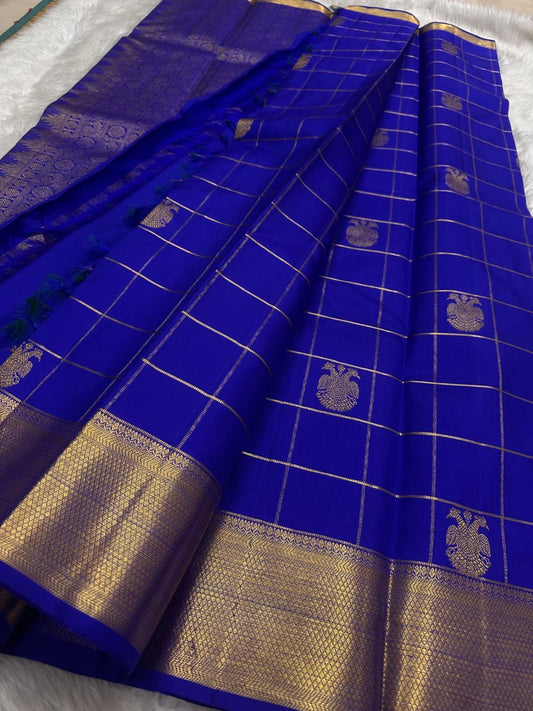
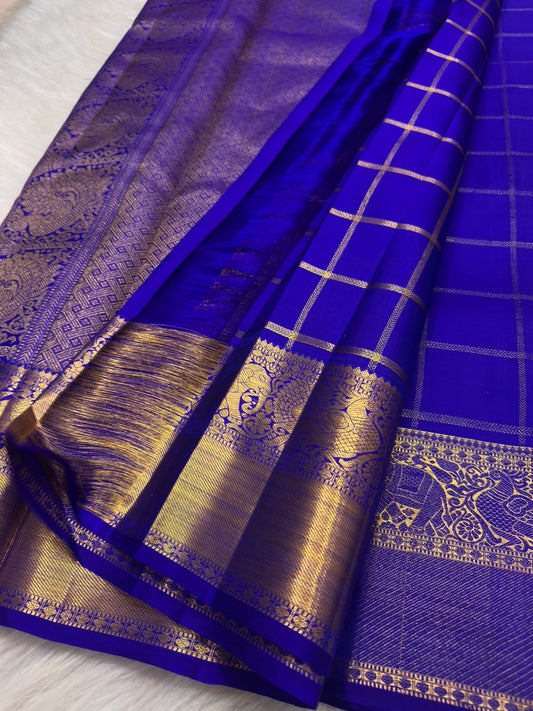
Royal Blue Pure Silk Kanchipuram Zari Kattam Saree with Arakku Floral-Chakram Pettu
Regular price $304.00Sale price $304.00 Regular priceUnit price per -
Vendor:Idam Living
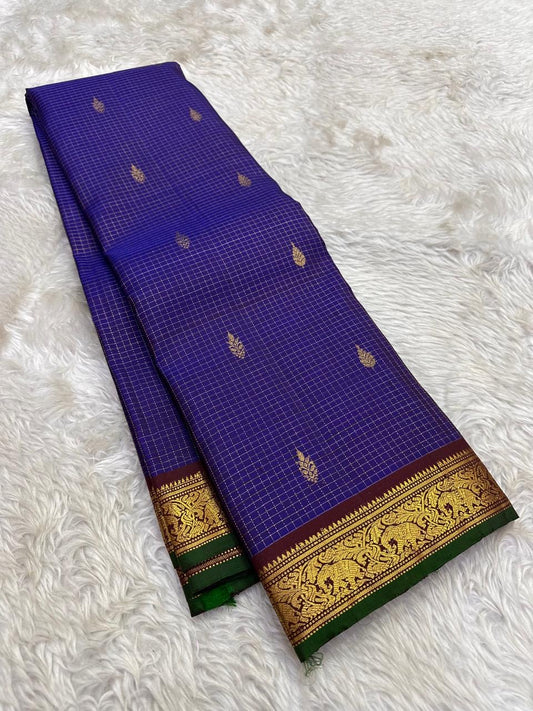
Deep Royal Violet Handwoven Pure Silk Kanchipuram Zari Kattam Saree with Yaanai Zari Border
Regular price $304.00Sale price $304.00 Regular priceUnit price per -
Vendor:Idam Living
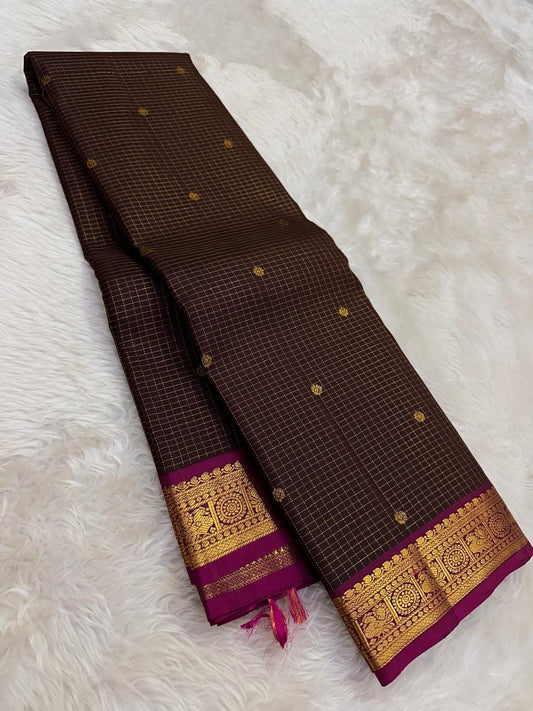
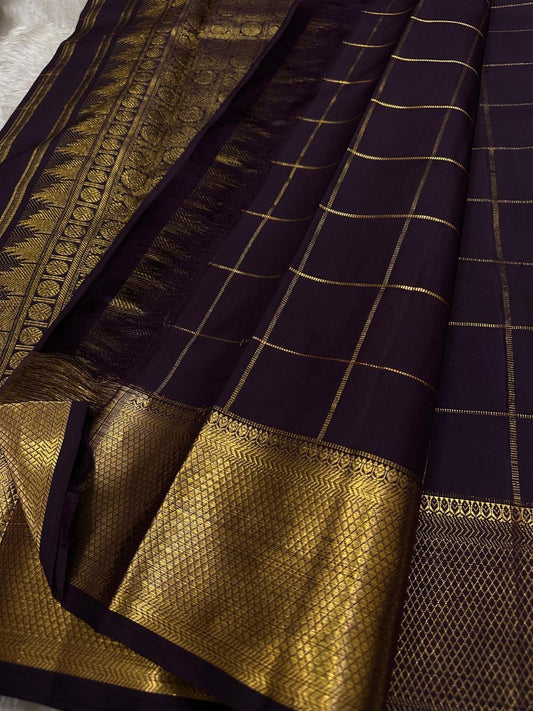
Deep Espresso Brown Handwoven Pure Silk Kanchipuram Zari Kattam Saree with Rani Pink Pettu
Regular price $304.00Sale price $304.00 Regular priceUnit price per -
Vendor:Idam Living
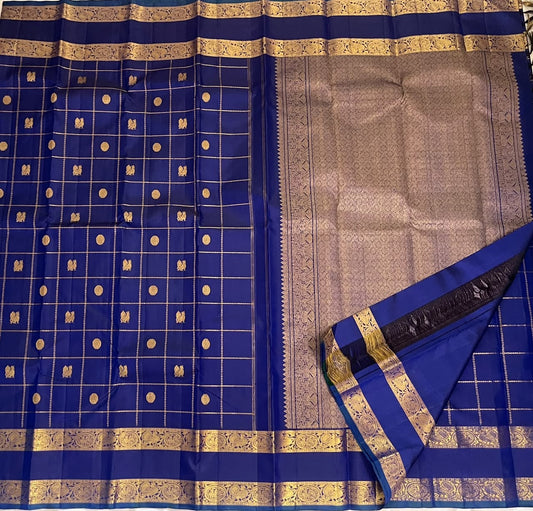
Deep Royal Blue Handwoven Pure Silk Kanchipuram Zari Kattam Saree with Annam & Chakram Buttas
Regular price $319.00Sale price $319.00 Regular priceUnit price per -
Vendor:Idam Living
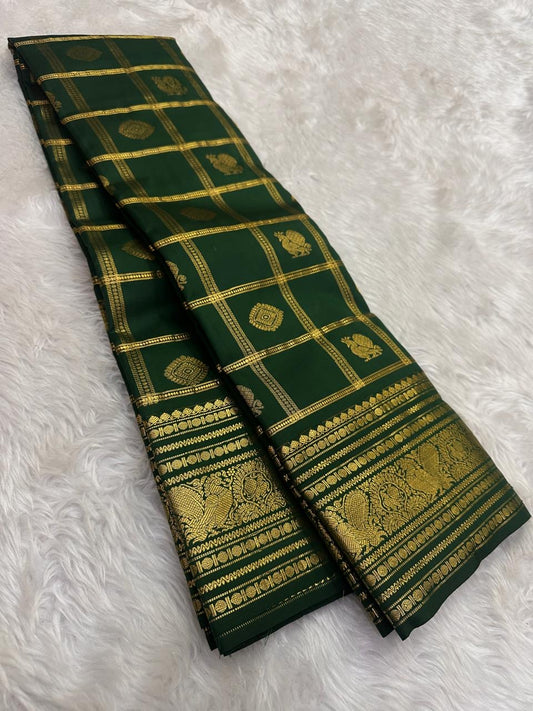
Deep Forest Green Lightweight Handwoven Pure Silk Kanchipuram Zari Kattam Saree with Peacock Zari Border
Regular price $234.00Sale price $234.00 Regular priceUnit price per -
Vendor:Idam Living
Deep Aubergine Gandaberunda Zari Kattam Pure Silk Kanchipuram Saree
Regular price $314.00Sale price $314.00 Regular priceUnit price per -
Vendor:Idam Living
Deep Coffee Brown Gandaberunda Zari Kattam Pure Silk Kanchipuram Saree
Regular price $314.00Sale price $314.00 Regular priceUnit price per -
Vendor:Idam Living
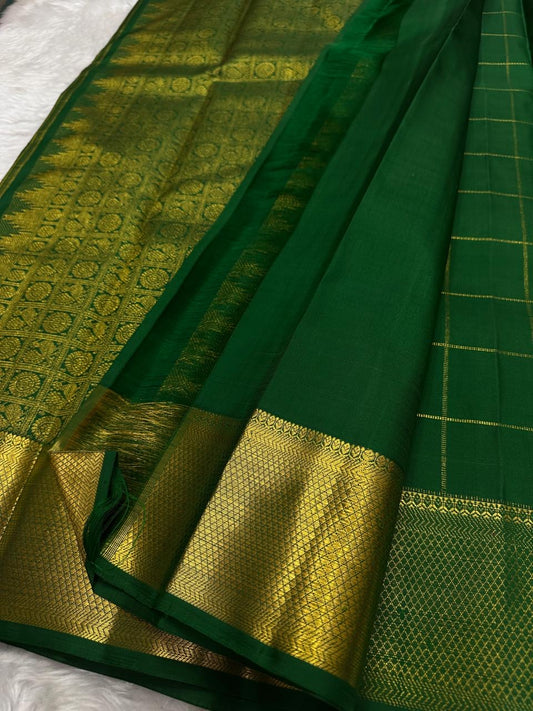
Deep Emerald Green Gandaberunda Zari Kattam Pure Silk Kanchipuram Saree
Regular price $314.00Sale price $314.00 Regular priceUnit price per -
Vendor:Idam Living
Royal Blue Gandaberunda Zari Kattam Pure Silk Kanchipuram Saree
Regular price $314.00Sale price $314.00 Regular priceUnit price per -
Vendor:Idam Living
Deep Violet Gandaberunda Zari Kattam Pure Silk Kanchipuram Saree
Regular price $314.00Sale price $314.00 Regular priceUnit price perSold Out -
Vendor:Idam Living
Raspberry Pink and Royal Blue Handwoven Pure Silk Kanchipuram Zari Kattam Saree with Paisley and Peacock Zari Border
Regular price $329.00Sale price $329.00 Regular priceUnit price per -
Vendor:Idam Living
Deep Green Handwoven Pure Silk Kanchipuram Zari Kattam Saree with Gold Zari Buttas, Magenta Double Side Pet Border and Rich Contrast Pallu
Regular price $294.00Sale price $294.00 Regular priceUnit price perSold Out -
Vendor:Idam Living
Pale Mint Green Handwoven Pure Silk Kanchipuram Zari Kattam Saree with 2 Gram Gold Zari Checks, Deep Burgundy Border and Grand Antique Gold Zari Pallu
Regular price $394.00Sale price $394.00 Regular priceUnit price per -
Vendor:Idam Living
Deep Aubergine Handwoven Pure Silk Kanchipuram Zari Kattam Saree with 2 Gram Gold Zari Checks, Vermilion Red Border and Grand Yanai Motifs
Regular price $394.00Sale price $394.00 Regular priceUnit price per -
Vendor:Idam Living
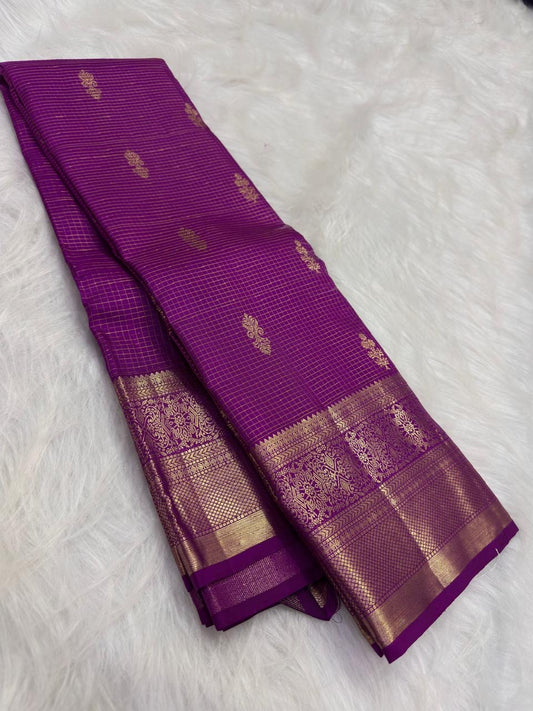
Vadamalli Purple Handwoven Pure Silk Kanjivaram Zari Kattam Saree with Antique Gold Zari Grid, Traditional Floral Buttas and Grand Woven Pallu
Regular price $329.00Sale price $329.00 Regular priceUnit price per -
Vendor:Idam Living
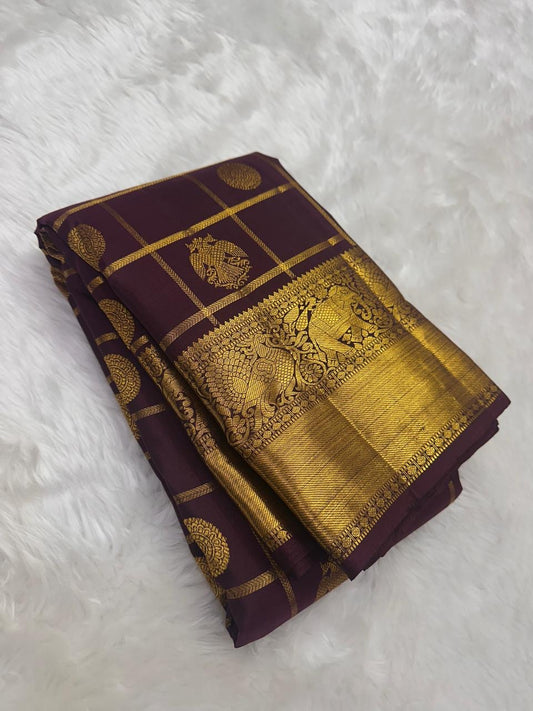
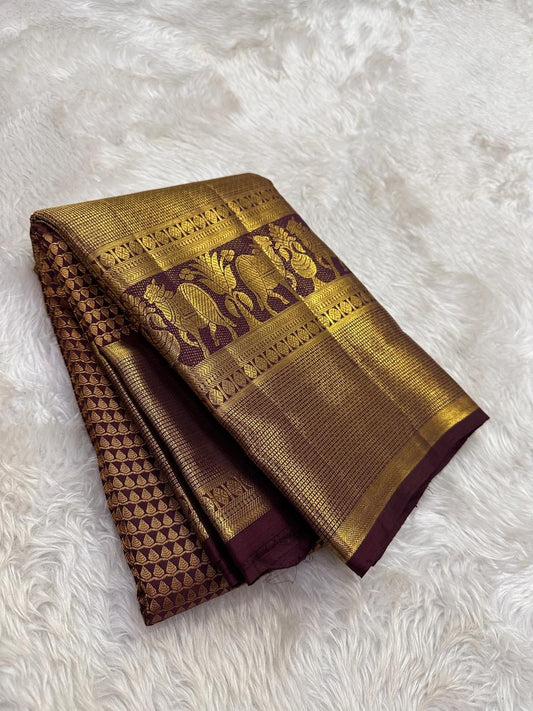
Deep Maroon Brown Handwoven Pure Silk Kanjivaram Zari Kattam Saree with Grand Antique Gold Elephant Border and Exclusive Woven Pallu
Regular price $474.00Sale price $474.00 Regular priceUnit price per -
Vendor:Idam Living
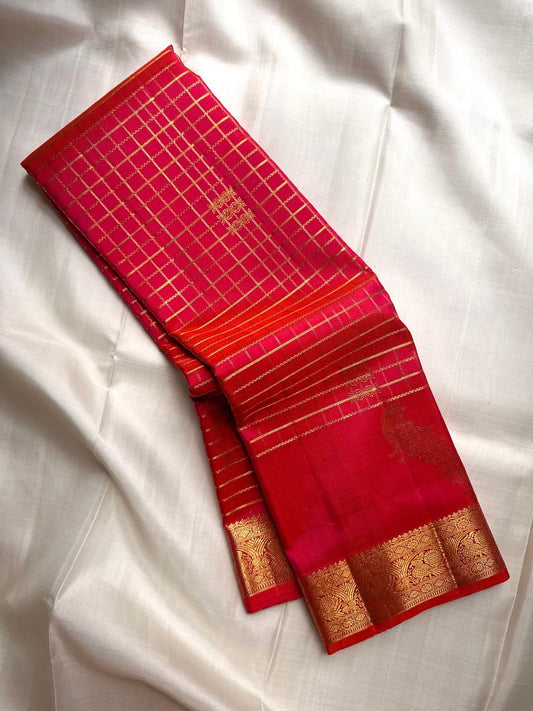
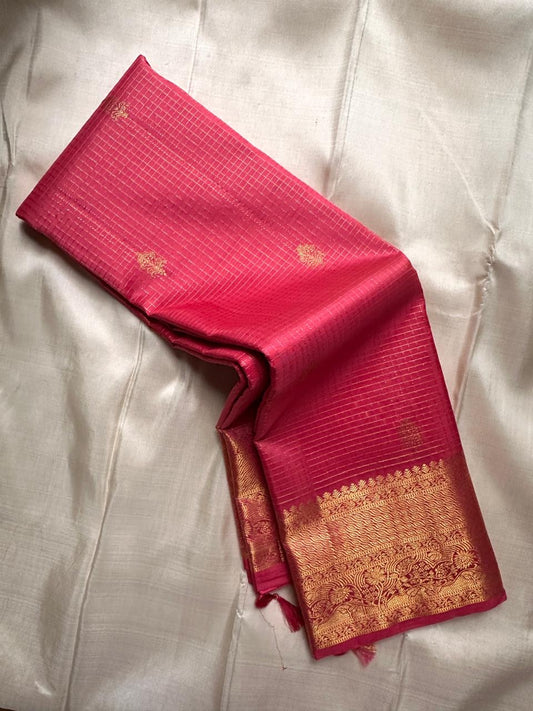
Chilli Reddish Pink Handwoven Pure Silk Kanjivaram Zari Kattam Saree with Antique Gold Checks, Mayil Motifs and Grand Woven Pallu
Regular price $324.00Sale price $324.00 Regular priceUnit price per -
Vendor:Idam Living
Pomegranate Pink Handwoven Pure Silk Kanjivaram Zari Kattam Saree with Antique Gold Zari Medallion Buttas, Yanai Border and Grand Woven Pallu
Regular price $324.00Sale price $324.00 Regular priceUnit price per -
Vendor:Idam Living
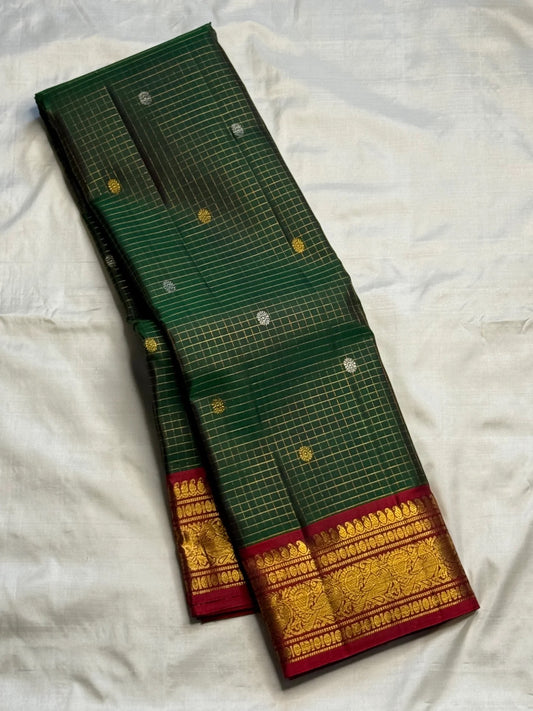
Deep Forest Green Handwoven Pure Silk Kanjivaram Zari Kattam Saree with Dual Gold and Silver Zari Buttas, Arakku Red Pallu and Traditional Zari Border
Regular price $339.00Sale price $339.00 Regular priceUnit price per -
Vendor:Idam Living
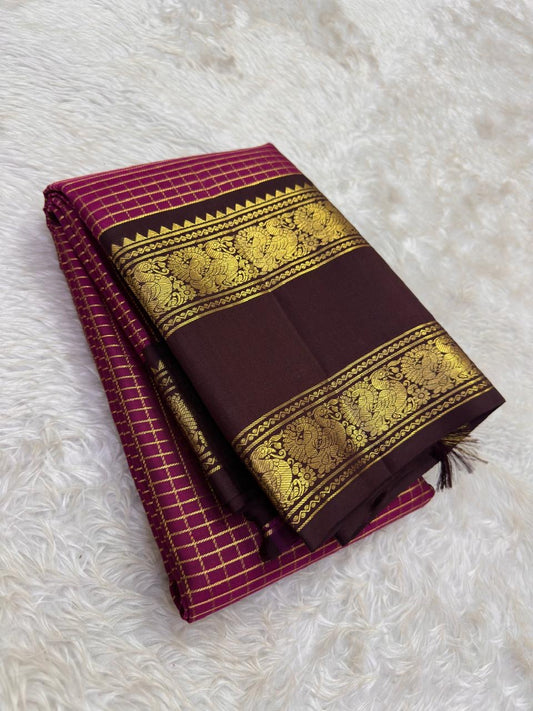
Deep Kanchana Brown Handwoven Pure Silk Kanjivaram Zari Kattam Saree with Arakku Red and Antique Gold Mayil Border
Regular price $329.00Sale price $329.00 Regular priceUnit price per -
Vendor:Idam Living
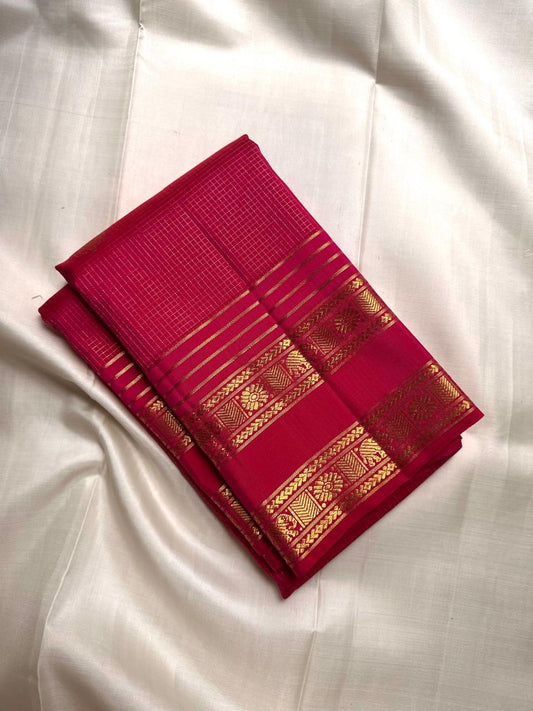
Raspberry Magenta Handwoven Pure Silk Kanjivaram Zari Kattam Saree with Deep Kanchana Brown and Antique Gold Mayil Border
Regular price $329.00Sale price $329.00 Regular priceUnit price per -
Vendor:Idam Living
Rani Pink Handwoven Pure Silk Kanchi Pattu Zari Kattam Saree with Antique Gold Zari Buttas and Floral Border
Regular price $294.00Sale price $294.00 Regular priceUnit price per -
Vendor:Idam Living
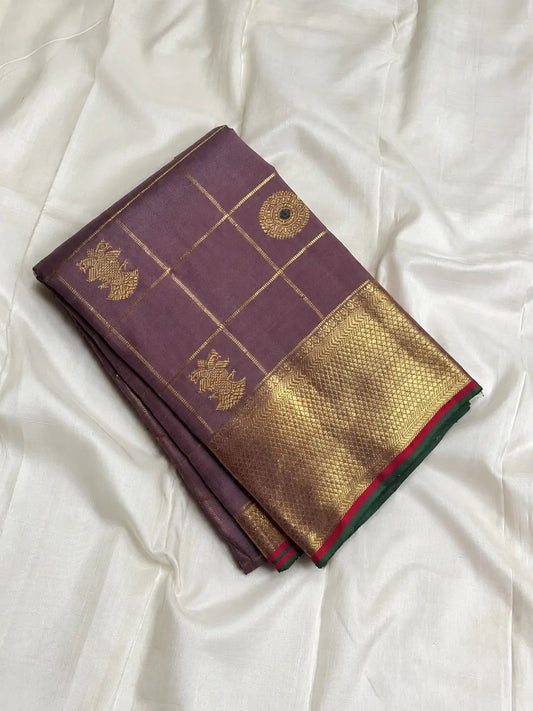
Muted Mauve Brown Handwoven Pure Silk Kanjivaram Zari Kattam Saree with Green Meenakari Zari Buttas and Antique Gold Border
Regular price $339.00Sale price $339.00 Regular priceUnit price per -
Vendor:Idam Living
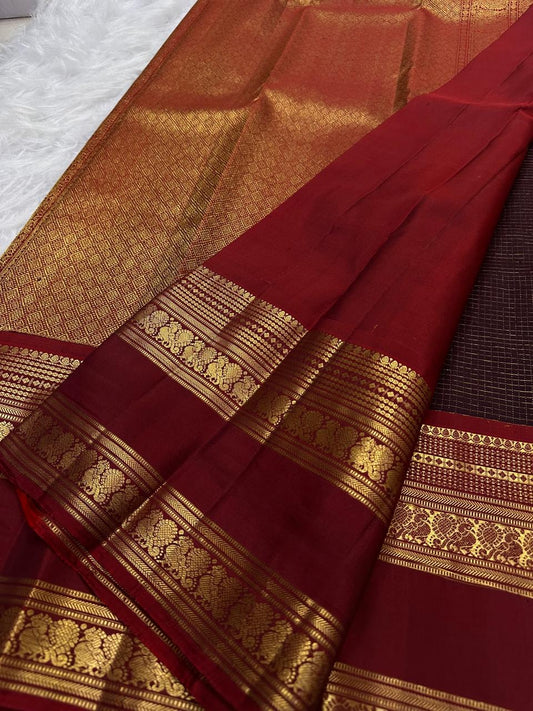
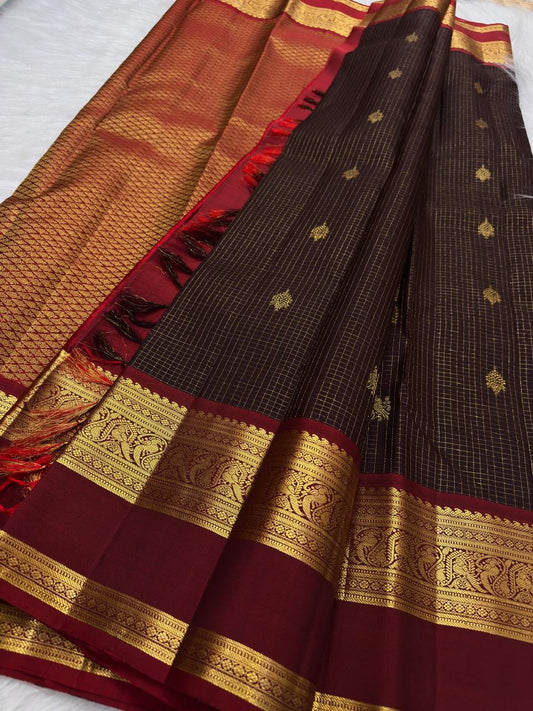
Deep Espresso Brown Handwoven Pure Silk KanchiPattu Zari Kattam Saree with Arakku Maroon Zari Border and Gold Buttas
Regular price $329.00Sale price $329.00 Regular priceUnit price per

Frequently Asked Questions
What is Zari Kattam in a Kanchipuram silk saree?
Zari Kattam — zari meaning gold metallic thread, kattam meaning grid or box in Tamil — is the Kanchipuram body weave in which gold zari threads run in both directions across the silk body, intersecting to form a luminous gold grid. Every intersection of a horizontal zari thread and a vertical zari thread creates a point of concentrated gold light — and across the full width and length of a Zari Kattam Kanjivaram body, thousands of these intersections accumulate into a structured, geometric surface of extraordinary luminosity. The grid is not printed, not applied, and not embroidered — it is woven structurally into the fabric at the loom, thread by thread, by a master weaver managing the precise intersection of silk and zari across the full six-metre length of the saree. Zari Kattam is also referred to as Zari Kattam Kanjivaram, Zari Kattam Kanjeevaram, and gold check Kancheepuram across different Indian communities in the USA.
What makes the Zari Kattam grid different from a printed gold check?
The Zari Kattam grid and a printed gold check may look similar in a photograph — but they are fundamentally different objects. A printed gold check is a surface coating applied to the fabric after weaving — the gold pattern sits on top of the silk fibres and will fade, crack, or peel over time. A genuine Zari Kattam Kanjivaram grid is woven structurally into the fabric at the loom — each gold zari thread passes through the full thickness of the silk body, interlacing with the warp threads at every intersection. The gold is part of the fabric, not on top of it. This structural difference has three consequences: the Zari Kattam grid does not fade; it catches light from multiple angles simultaneously rather than from one flat surface; and it is visible in full reverse form on the back of the saree — the gold grid present on both sides because the zari threads pass through the fabric, not across it.
Why is the Zari Kattam grid the most consistently luminous body weave in the Kanchipuram tradition?
Because it is the only Kanchipuram body weave in which gold zari threads run in both directions simultaneously across the body. A Vairaoosi saree catches light directionally — the parallel zari lines shimmer when the light hits them from one angle. A plain silk saree catches light evenly — the silk surface reflecting ambient light in all directions. But a Zari Kattam Kanjivaram catches light at every intersection of the grid — horizontal threads catching light from one axis, vertical threads catching light from the perpendicular axis, the two intersecting at every grid point. The result is a body that is luminous from every angle simultaneously — the gold grid appearing to glow rather than shimmer, the surface maintaining its luminosity whether the saree is in motion or still. Under the mixed indoor and outdoor lighting of a South Indian wedding venue in the USA, a Zari Kattam Kanjeevaram is the most consistently luminous body weave in the Kanchipuram vocabulary.
Why do South Indian brides and their families in the USA choose Zari Kattam Kanchipuram sarees for weddings?
Because the Zari Kattam grid body carries the ceremonial gold weight that weddings in the South Indian tradition demand — and does so with a visual presence that no other body weave in the Kanchipuram vocabulary can match. The structured geometric luminosity of the Zari Kattam grid is one of the most photographically powerful body weaves in the Kanchipuram tradition — the gold intersections catching camera flash and continuous light equally well, the saree reading with exceptional presence across a large wedding venue and in the event photography that documents every milestone moment. For the bride, the mother of the bride, and senior family members at South Indian weddings across the USA — in New Jersey, Texas, California, Georgia, and beyond — a Zari Kattam Kancheepuram in a deep ceremonial colour with a strong Korvai or Varisaipet border is the most authoritative Kanchipuram choice for the most significant family occasion.
What border types bring out the best in a Zari Kattam Kanchipuram body?
The Zari Kattam body is already rich with gold — the border needs to frame that richness without overwhelming it or disappearing into it. The most celebrated border pairing for a Zari Kattam Kanjivaram is the Korvai construction in a deep contrast colour — the crisp structural boundary of the Korvai border providing a clean visual edge between the luminous gold grid body and the solid colour border, each element reading clearly against the other. A Varisaipet multi-band border in the same colour family as the silk ground of the Zari Kattam body — rather than in contrast — creates a more unified composition, the border reading as a continuation and deepening of the body rather than a frame around it. A Rettapet twin border in a strong contrast colour provides the cleanest, most architectural framing — the two precise parallel lines giving the Zari Kattam body a composed edge without competing with the grid. The one border that requires care with Zari Kattam is a heavily zari-dense Varisaipet — the two elements can compete for visual dominance. The best Zari Kattam border pairings always ensure the body and border are in clear dialogue rather than competing for attention.
What are the three physical tests that distinguish a genuine Zari Kattam Kanjivaram from a printed or machine-made imitation?
A genuine Zari Kattam Kanjivaram body can be authenticated through three visual tests that require no specialist knowledge. First — the reverse side test: turn the saree over and look at the body. In a genuine woven Zari Kattam Kanjeevaram, the gold grid will be clearly visible on the reverse in mirror form — the zari threads passing through the full thickness of the fabric create a reverse grid that is structurally identical to the front. A printed or applied gold check has no reverse echo. Second — the multi-angle light test: move the saree slowly under a light source. A genuine Zari Kattam grid catches light from multiple angles simultaneously — the horizontal and vertical zari threads responding to different light directions at the same moment. A printed gold check responds uniformly from one angle. Third — the Silk Mark label: every genuine Kanchipuram silk saree at Idam Living carries Silk Mark certification from the Central Silk Board of India, confirming 100% pure mulberry silk in both the silk body ground and the zari border.
Why does the supply chain between the Kanchipuram loom and your doorstep matter more for a Zari Kattam saree than any other Kanchipuram weave?
Because the quality of a Zari Kattam Kanjivaram is uniquely sensitive to handling and storage between the loom and the buyer. The gold zari grid — woven at high thread density across the full body — is susceptible to tarnishing and flattening under improper storage conditions: humidity, synthetic packaging, and prolonged warehouse compression all affect the luminosity of the zari grid over time. Most Zari Kattam Kancheepuram sarees sold through US retailers have spent six months or more in warehouse storage across multiple handling stages — Kanchipuram weaver, local agent, Chennai wholesale house, export agent, US retailer — each stage adding storage time and reducing the freshness of the zari. At Idam Living, our founder Anula Naidu's maternal grandfather's family are generational weavers from Kunnam village, Kanchipuram. We source directly from the loom — the Zari Kattam Kanjeevaram you receive is the same piece the weaver finished, Silk Mark certified, packed in a pure cotton storage bag, and shipped free to your door across all 50 US states from New Jersey with minimal handling between loom and doorstep.
How do I care for a Zari Kattam Kanchipuram saree to preserve the gold grid long-term?
The gold zari grid of a Zari Kattam Kanjivaram — woven structurally into the silk at the loom — is far more durable than surface gold treatments, but it requires specific care to maintain its luminosity over decades. Dry clean only — water and domestic detergents can affect the metallic thread coating on the zari, dulling the gold over time. After dry cleaning, air the saree fully in shade before folding — residual dry cleaning solvent trapped in the zari threads can accelerate tarnishing if the saree is folded and stored before fully airing. Store in the pure cotton storage bag that comes with every Idam Living saree — cotton breathes naturally and maintains the zari grid lustre far better than plastic covers which trap humidity and accelerate tarnishing. For the Zari Kattam grid specifically: fold the saree so the fold lines run parallel to the grid lines rather than across them — folding across the grid at right angles to both thread directions creates crease stress at the zari intersections. Refold along different lines every few months. Keep away from perfume and deodorant — the alcohol in both damages metallic thread coatings over time.