




You will not be allowed to compare more than 4 products at a time

Collection: Red Silk Sarees
Across South Asian festivals and weddings, red has never simply been a colour — it is the colour of auspiciousness itself. From bridal Kanchipuram silks to the vermilion of sindoor, red marks new beginnings, prosperity and the presence of the goddess. Idam Living’s Red Silk Sarees bring together handwoven vermilion, ruby, crimson, pillar-box red and maroon sarees for Diwali, Navratri, weddings, engagements and every ceremony where red belongs.
Why Red Matters at Festival Time
In Hindu tradition, red is linked to Shakti — the goddess's own colour — and to marriage, fertility and good fortune. It is the shade a South Indian bride traditionally wears for her muhurtham, the colour lit up across homes during Diwali, and the colour worn to invoke Durga during Navratri. A red silk saree at a festival or wedding is rarely a passing style choice; it carries centuries of ritual meaning with it.
Why Kanchipuram Silk Carries This Weight
Every pure silk Kanchipuram saree in this edit is handwoven in the temple town of Kanchipuram, Tamil Nadu — many by artisan families in Kunnam village who have carried the craft for generations. Kanchipuram silk is prized for its structural weight and durability: in the Korvai technique, body and border are woven separately and interlocked by hand on the loom, so the zari border can carry a contrasting colour without ever fraying loose. This is the weave families choose for a saree meant to be worn for decades and passed down — which is exactly why red, the colour of marriage and milestones, is so often woven into Kanchipuram silk rather than a lighter fabric.
Where Chanderi Silk Fits In
Alongside the Kanchipuram reds, this edit includes handwoven Chanderi silk sarees from Chanderi, Madhya Pradesh. Chanderi is woven finer and lighter than Kanchipuram silk, prized for its sheer, luminous drape rather than structural weight — it is the saree families reach for at a daytime mehendi, haldi or festive lunch, where a heavier Kanchipuram silk would be too much. Together, the two traditions cover a full festival wardrobe: Chanderi for daytime celebration, Kanchipuram for the evening's main event.
These are not replicas of one another — each saree here is individually handwoven and carries the colours, motifs and weaving character of its own textile tradition. Browse the edit below, or read more about shipping timelines and silk saree care.
Frequently Asked Questions
Why is red considered auspicious for Indian festivals and weddings?
Red is associated with Shakti, marriage and prosperity in Hindu tradition — worn by South Indian brides, lit through homes at Diwali, and central to Navratri and Durga Puja celebrations.
What makes Kanchipuram silk significant for bridal and festival wear?
Kanchipuram silk is handwoven in Kanchipuram, Tamil Nadu, often using the Korvai technique, where body and border are woven separately and interlocked by hand — giving the saree exceptional durability and letting a contrasting zari border be added without weakening the weave. This makes it a traditional heirloom choice for weddings and milestone celebrations.
How is Chanderi silk different from Kanchipuram silk?
Chanderi silk, from Chanderi in Madhya Pradesh, is woven finer and lighter, valued for its sheer, luminous drape rather than structural weight — better suited to daytime festival functions, while Kanchipuram silk is the heavier, more ceremonial choice for weddings and evening events.
What shades of red are included in this collection?
The edit spans vermilion red, ruby red, crimson, pillar-box red, rust red, deep maroon and wine, across pure Kanchipuram, Chanderi and Banarasi silk weaves.
Do these sarees include a blouse piece?
Most sarees include a 0.8m self-colour blouse piece with complimentary in-house tailoring through August 27 ($30 value after). See our Blouse Stitching Guide for details.
Showing 1-4 of 4 Results
-
Vendor:Idam Living
Chilli Red Kadhwa Pure Silk Banarasi Saree with Zari Motifs | Silk Mark Certified | Idam Living
Regular price $274.00Sale price $274.00 Regular priceUnit price per -
Vendor:Idam Living
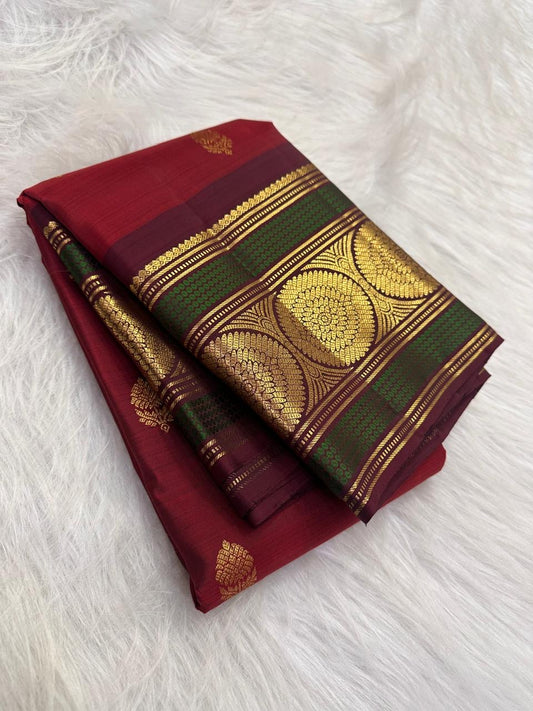
Deep Arakku Red Handwoven Pure Silk Kanchipuram Butta Saree with Grand Kamalam Zari Border
Regular price $289.00Sale price $289.00 Regular priceUnit price per -
Vendor:Idam Living
Irattai-Niram Petal Pink & Arakku Handwoven Pure Silk Kanchipuram Butta Saree with Maanga Zari
Regular price $304.00Sale price $304.00 Regular priceUnit price per -
Vendor:Idam Living
Kumkumam Red Handwoven Pure Silk Kanchipuram Butta Saree with Annam–Mayil Thanga Zari Border
Regular price $294.00Sale price $294.00 Regular priceUnit price per
